Media
The media landscape in Germany is characterised by diversity, independence, high journalistic quality and a dual media system. The Media Ownership Monitor is the map.
As the ‘fourth estate’ alongside the executive, legislative and judiciary, the media play a central role in democracy and opinion-forming in the Federal Republic of Germany, especially in view of the lessons learned from the two dictatorships in the 20th century.
The German media system is based on a dual broadcasting model with public and private providers. The main forms of media include television, radio, print media and online offerings. Freedom of the press is enshrined in the Basic Law and protected by a press code and self-regulatory mechanisms.
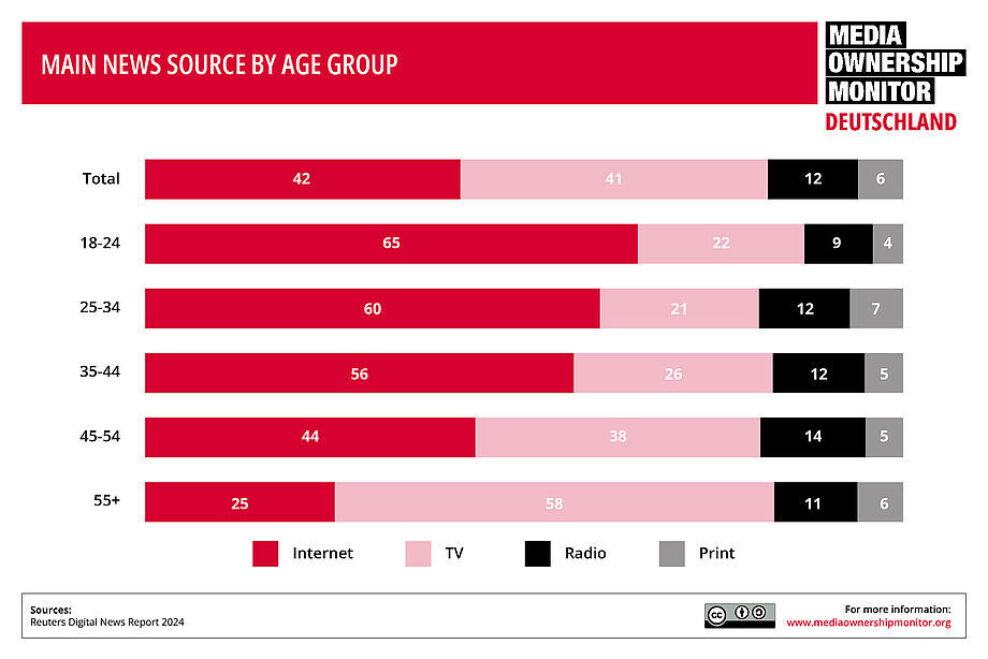
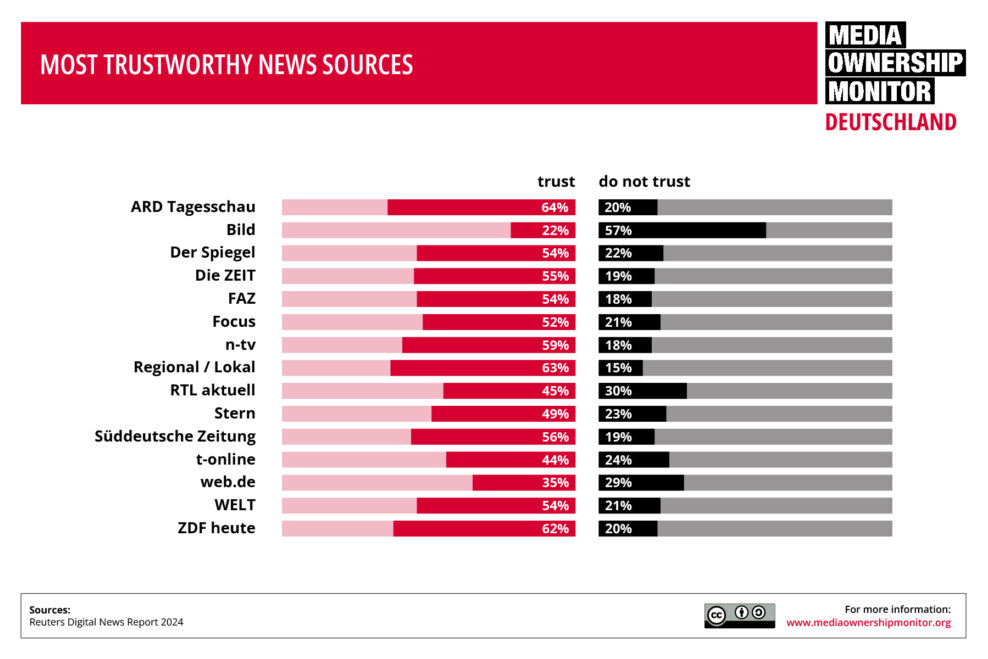
Media use in Germany has changed dramatically in recent years. The internet has become the main source of news. Two-thirds of Germans use it as their primary source of information. At the same time, traditional media such as television and radio remain relevant, especially among the older population.
The German media industry is facing major challenges, such as digitisation, leading to changing user habits and new competitors.
In 2025, Media Ownership Monitor Germany expanded its scope through additional research conducted from May through December. The database now includes market-leading regional newspapers and radio stations alongside the national outlets previously monitored. The research also identified the 15 most influential social media influencers with news-focused profiles, recognizing that opinion formation increasingly occurs beyond the outputs of traditional newsrooms. This expansion reflects how German media power is distributed across traditional and digital platforms today.