Radio
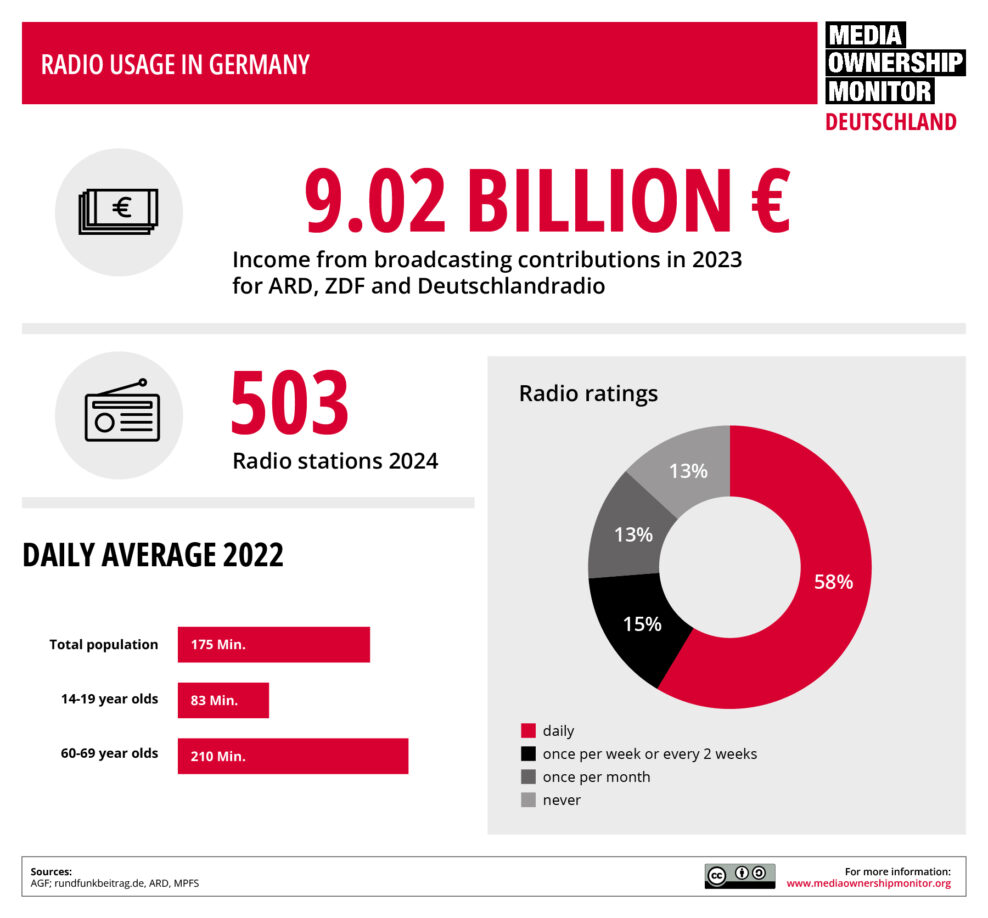
In contrast to the TV market, the radio landscape in Germany is characterised by a wide variety of stations and formats. As with television, there is a dual system of public and private providers.
The public radio broadcasters include the regional broadcasting corporations of the ARD, such as Westdeutscher Rundfunk (WDR) and Bayerischer Rundfunk (BR). Deutschlandradio broadcasts throughout Germany with its programmes Deutschlandfunk, Deutschlandfunk Kultur and Deutschlandfunk Nova.
In the private sector, there are a large number of regional and national broadcasters that often specialise in particular music genres or target groups. Well-known examples include Radio NRJ, Antenne Bayern and Radio Hamburg.
Radio usage in Germany remains stable despite competition from streaming services and podcasts. About 53 million people listen to the radio daily, with the average listening time being three to four hours.
Digital radio (DAB+) is becoming increasingly important and offers better sound quality and a wider selection of stations. By the end of 2023, 23% of households already had at least one DAB+ device.
The radio landscape in Germany is adapting to the digital challenges by offering their programmes as live streams or podcasts and expanding their online presence.
In 2025, Media Ownership Monitor Germany expanded its radio database to include 11 regional radio stations, four of which are part of the public broadcasting system. This expansion recognizes that radio consumption in Germany remains strongly regional. While national broadcasters reach audiences across the country, regional and local stations form the backbone of everyday radio consumption of most Germans. Monitoring only national radio would overlook a critical segment of the broadcasting landscape and miss important patterns in media ownership concentration at the regional level.